Founded in 1963, St. Francis Neighborhood Center (SFNC) is Baltimore's oldest continuously operating neighborhood center. From a historic building in the Reservoir Hill neighborhood, once occupied by clothier Jos. A. Bank and just across the street from Gertrude Stein's onetime home, SFNC runs an after-school program for more than 100 students four days a week during the school year, a seven-week summer program, elder programming, and a steady calendar of community facility rentals.
Building the Multipurpose Room
In 2025, SFNC completed its second major capital expansion, adding two dedicated classrooms to the four pre-existing rooms, a new lobby, and a multipurpose room roughly three-quarters the size of a standard gym. The room splits down the middle with a moving dividing wall, a traditional projector and screen on one side, and a full Lü system with wall-based projection on the other. While the configuration allows for simultaneous programming in different portions of their space, it has also become one of the most attractive rental spaces in this part of the city.
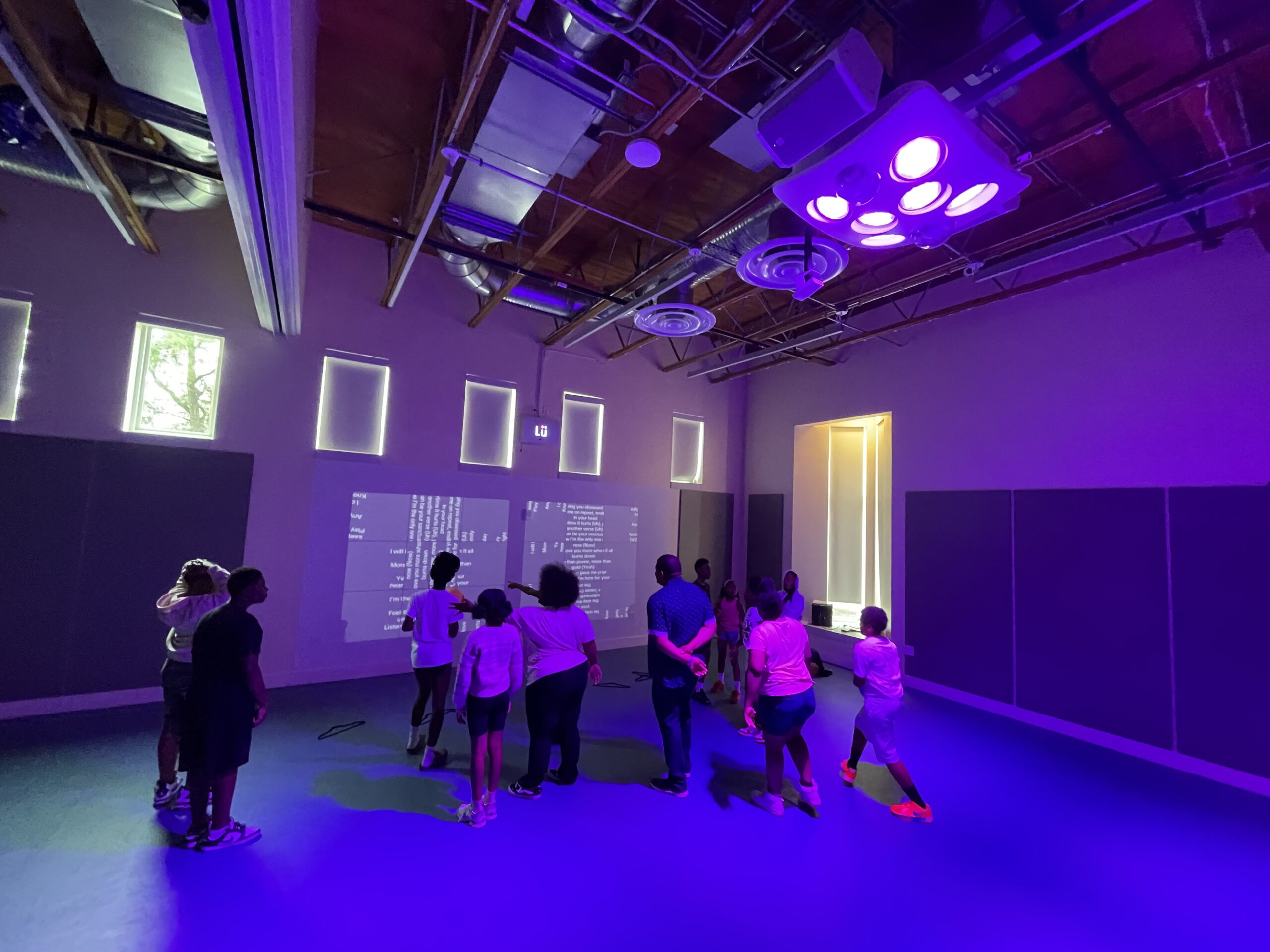
Mark Tough arrived at the St. Francis Neighborhood Center as its new IT Specialist, a role he describes as a blend of small-organization CIO and STEAM enrichment instructor, just as that construction began. He'd previously run a Baltimore housing nonprofit, and that background pulled him straight into the planning process.
“I was an active participant in weekly construction meetings,” he recalls, “to make sure the electrical, lighting, and HVAC systems could accommodate every component of the Lü unit” going into the new room.
How the Multipurpose Room Gets Used
Since SFNC has no physical education staff or standing gym equipment competing for the Lü side of the room, all six of the Center's instructors can bring students to the system at any point during programming hours. STEAM enrichment classes have taken that access further:
“Our STEAM enrichment programs integrate customization of Lü games in our Exploratorium,” Mark says, referring to the Center's computer lab, “older students shooting photos to incorporate into the Puzz app for younger students.”
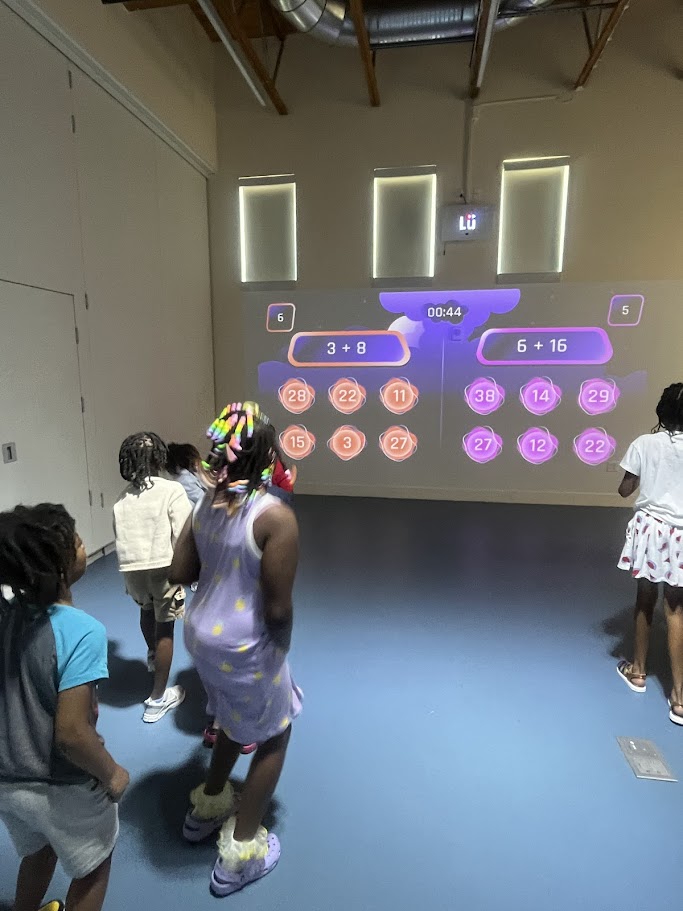
It's a small pipeline, students designing content that other students then play, that turns the Lü into a creative tool as much as a movement one.
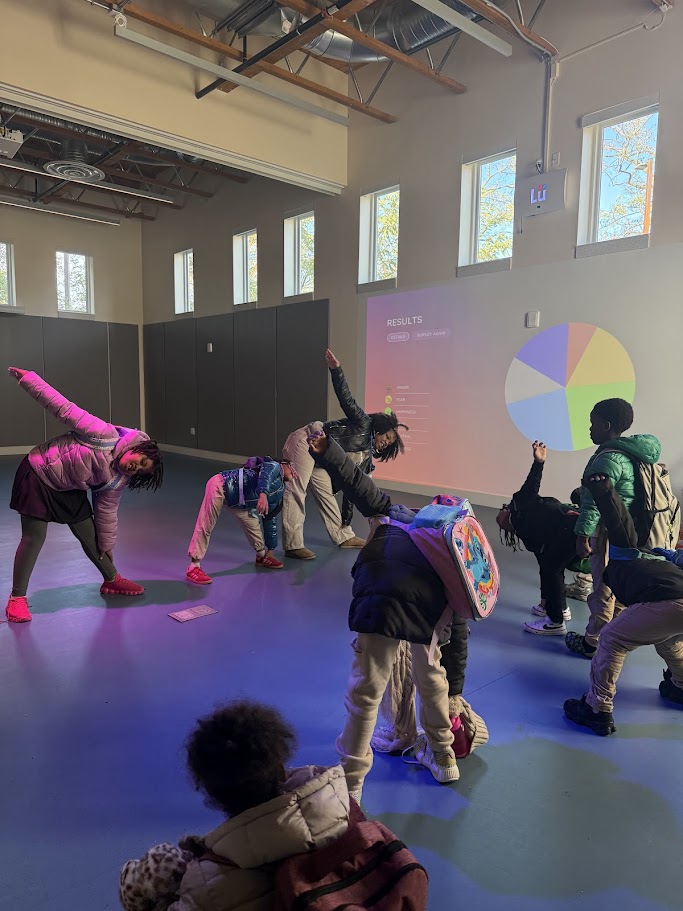
That being said, youth are far from the only users of their system. Elders in SFNC's community programs are now finding their own place on the same system, using Gaïa and other guided workout content built into the platform. Mark is already planning what comes next:
“I am designing efforts for this fall that will bring our after-school students together with our older constituents for inter-generational learning and fun.”
A third group is just beginning to make use of the room: renters. SFNC opens the multipurpose room to the community for events such as birthdays, graduations, and anniversaries. Lü has become one of its most requested features, generating rental revenue that helps sustain the Center's core services. Mark calls it “an affordable neighborhood-based variation on a Dave & Buster's kind of experience,” letting renters combine adult activities in one part of the room with Lü play in the other. Even without full interactive play, the system's light and sound rig gives renters a distinctive atmosphere on its own.
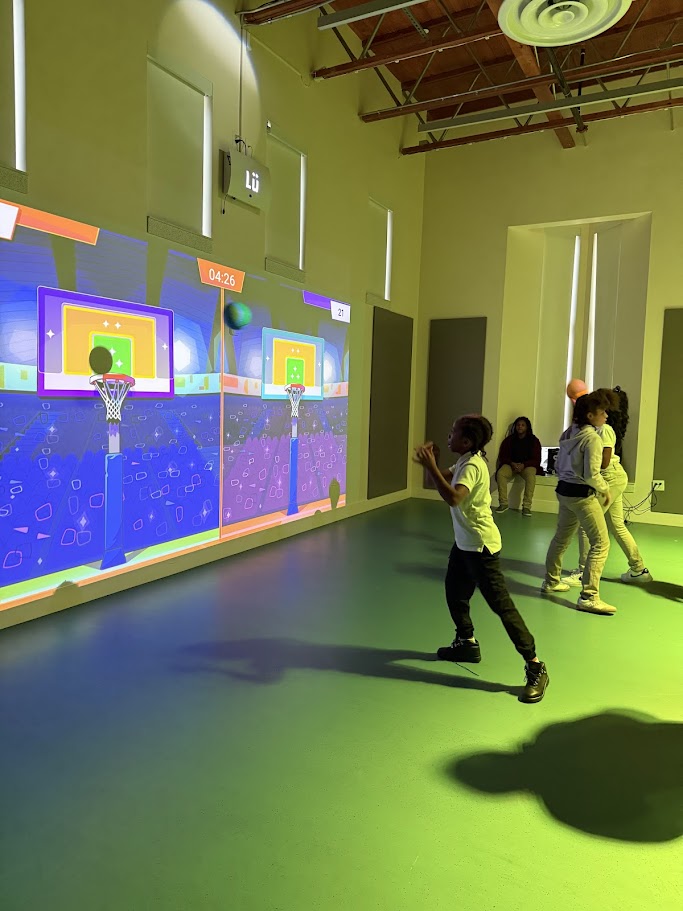
Mark doesn't see SFNC's setup as a one-off. School gyms are an obvious fit for a solution like Lü, he says, but the bigger opportunity sits in spaces like his own: neighborhood centers, libraries, senior centers, and similar community facilities, particularly where different groups can share the same system at different points in the day. SFNC's room, one Lü unit serving students, elders, and renters in turn, is a working example of that idea in practice.
Looking Ahead
St. Francis Neighborhood Center is closing out its first full after-school year with Lü and is now migrating to the Lü+ subscription to expand what students, elders, and renters can do with the system.
“Our Lü journey is just reaching the end of its beginning.”, states Mark
For SFNC, the Lü has become more than equipment in a new room. It's the common ground where students, elders, and neighbors move, connect, and play, in a space built for all of them.