
A ball hits the wall, and a target bursts into color. A group races to the other side of the room as the music speeds up and the lights change. In a gym, an entertainment center or any other shared room, an interactive playground turns a blank wall into a play space that responds to movement.
An interactive playground is a play space where an audiovisual system projects games onto a wall, detects players' movements and responds in real time with images, sound and light. It encourages physical activity by getting participants moving, and can be used for learning, training or entertainment.
At a glance
- An interactive playground usually combines a projector, a motion sensor, a sound system and lighting in a single installation.
- Players interact with the wall by throwing a ball, touching it or moving around, on their own or in teams.
- They can be found in any kind of shared space, such as schools, community centers, senior living communities, family entertainment centers and fitness centers.
- Configurations range from ceiling-mounted to portable to wall-mounted units, depending on the space.
How does an interactive playground work?
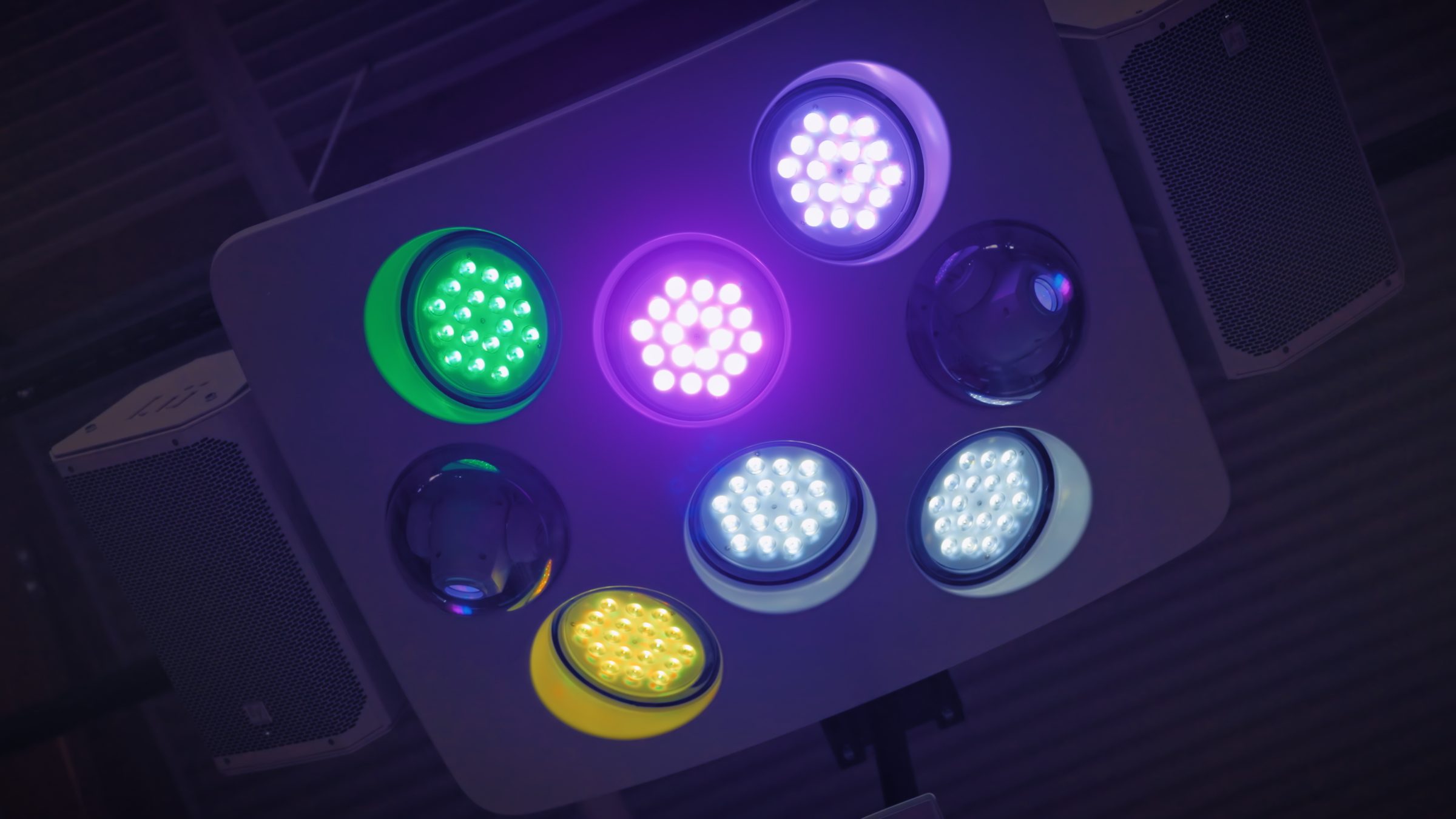
Lü systems have four main components: a high-definition laser projector displays the game on a wall, a camera or 3D sensor tracks movement in front of the projection, a sound system matches the action, and multicolor LED lighting brings the room to life.
When a player throws a ball at a projected target, the sensor detects the impact, and the game reacts instantly: the target bursts, a point is added to the scoreboard, a sound plays. Depending on the app, players interact by throwing a ball, touching the wall or moving around the room. The facilitator picks the game, sets the difficulty and starts the session from a simple interface.
How is it different from a playground or a video game?
A traditional playground always offers the same structures, while an interactive playground can transform a room in seconds: a throwing game, then a quiz, then a dance session, all in the same space.
Unlike a video game or console, it gets the whole body moving without a controller, and it's played as a group rather than alone in front of a screen.
It also differs from interactive floors, which project onto the ground. Wall projection allows more accurate tracking, reduces shadows cast by players and leaves the floor free for running and moving around.
Why are organizations interested?
Because getting people moving is still a challenge. According to the World Health Organization, about 31% of adults and 81% of adolescents worldwide are not active enough. An interactive playground uses play to inspire movement, making it a versatile solution for a wide range of audiences.
Where are interactive playgrounds used?
Schools
This is where the concept first came to life. PE teachers use it to get the whole class moving at once, with apps that also bring in math, language arts and science.
Community centers
Community centers and youth organizations use it to offer engaging group activities for mixed age groups in multipurpose rooms.
Senior living communities
In senior living, it gets residents moving gently, standing or seated, and creates opportunities to connect through memory games, trivia or active bingo.
Family entertainment centers
In family entertainment centers, it becomes an attraction where friends and families play together, with precision games and friendly competition that feel new on every visit.
Fitness centers
Fitness centers build it into group classes to make workouts more motivating, with cardio games, choreographies and interval timers displayed on the wall.
What configurations are available?
A Lü system can be mounted on the ceiling, on a wall or moved from room to room.
| Configuration | Installation | Minimum space | Best for |
|---|---|---|---|
| Üno | Ceiling-mounted | 14 ft × 8 ft (4.2 m × 2.4 m) wall, 10 ft (3 m) ceiling | Gyms and large rooms |
| Möve | Portable, set up in 5 minutes | 12 ft × 6.75 ft (3.7 m × 2 m) wall, 8 ft (2.4 m) ceiling | Shared rooms, use across several locations |
| Höp | Compact wall-mounted, no ceiling rigging | 11 ft × 6 ft (3.4 m × 1.9 m) projection, 8 ft (2.4 m) ceiling | Common rooms and small to medium-sized spaces |
Who is Lü?
Since 2017, Lü has been designing and building interactive playgrounds that bring together audiovisual technology, interactive content and the joy of play. First created for school gyms, its solutions are now in more than 3,500 locations across over 40 countries. Its app library is as much about learning as it is about moving, having fun and feeling good. Through Lü Community, users around the world can also create their own content and share it with one another.
Frequently asked questions
What's the difference between an interactive playground and an interactive wall?
The interactive wall is the surface the game is projected on. The interactive playground is the complete experience: projection, motion detection, sound, lighting and a library of games.
How many people can play at once?
It depends on the configuration and the game. In a gym equipped with Üno, a whole class can take part. With Höp, designed for smaller rooms, people usually play in small groups or teams.
Do you need a subscription?
No. Lü systems are a one-time purchase and come with a large app library. The Lü+ membership is optional and unlocks exclusive apps and content creation tools.
How much does an interactive playground cost?
Pricing depends on the type of system, the available space and your location. Request a quote for pricing tailored to your project.
Want to see an interactive playground in action?
Contact us for a presentation, a live demo or a quote tailored to your space.